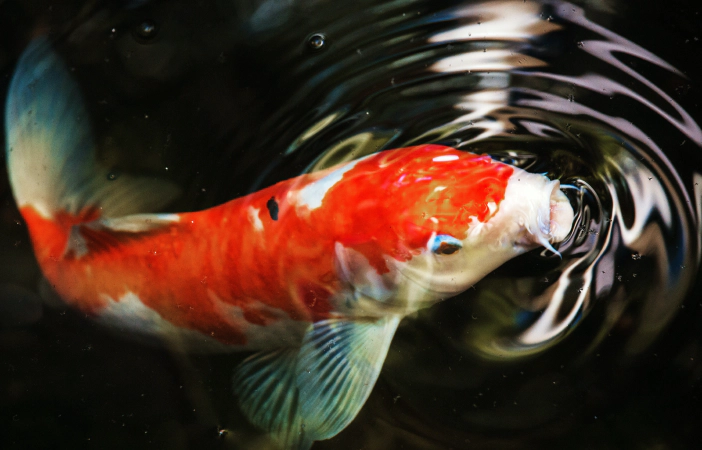
The minimum pond size for koi is 1,000 gallons, or 4,500 liters. This is the case even if you have a good filter.
This may surprise you, but the fact is that koi grow to a size of around 2 feet long, and they are very active fish that need plenty of space to swim around.
The absolute minimum size for keeping koi is therefore limited by this size that they can grow to.
Now, this doesn’t mean that a 2 foot fish will be comfortable in a 1,000 gallon pond, because it will put a lot of stress on the fish.
Also, I’m not sure if you’re aware, but koi can live up to 50 years, which is pretty old for a fish. If you’re planning on buying koi, you’re committing to looking after them for a very long time.
With both of these factors in mind, you really should go for a pond size of at least 2,000 gallons, or 9,000 liters, if you think you’re going to be that committed to koi keeping.
This is because a 2,000 gallon pond can comfortably house 3 koi up to 2 feet long, and 1,000 gallons per koi is the bare minimum that you should aim for.
The Problem With Koi Pond Kits
It’s really difficult to find a pre-made koi pond that’s 1,000 gallons in volume. Most of them are around 200-300 gallons, which is nowhere near suitable for koi.
However, I do think it’s possible to make a 1,000 gallon koi pond using a koi pond kit, but you’re going to have to get creative.
For example, you can buy two 500 gallon kits and use them to make one larger pond. Koi pond kits are really just a collection of the most important things you need to make a pond.
These things are a pond liner, an underlay, a skimmer or waterfall filter, and a pump.
If you can get all of these separately for cheaper than you can get a complete kit, then go for it. You can make a pond that’s 1,000 gallons or more with these parts.
For the pond liner, you can use a PVC or EPDM liner. They’re both safe for fish, and they’re what most professional pond builders use.
You could also try a rigid pre-formed pond liner if you’re going for a small pond. They’re quite a bit more expensive than a PVC or EPDM liner, but they’re easier to install because they’re pre-formed.
Maximum Stocking Density for Small Koi
Koi are very messy fish that produce a lot of waste, and that means they’re going to need a more powerful filter than most fish.
The general rule of thumb is that you should have a filter that’s at least 50% the size of your pond, but this is just for an average stocking density of fish.
If you want to keep koi in a pond that’s on the small side, then you need to do your best to minimize the waste.
This means that you should have a powerful filter that’s at least 100% the size of your pond. A 1,000 gallon pond should have at least a 1,000 gallon per hour filter.
Also, you should avoid overfeeding your fish. This is because uneaten food will sink to the bottom of the pond and cause pollution problems.
If all the food is gone in 5 minutes, then you’re feeding your koi the right amount. If there’s uneaten food, then you’re overfeeding them.
In a small pond, it’s especially important to keep the waste levels down. Rather than feeding your koi with koi pellets, I would recommend feeding them with live food instead.
This is because koi pellets are more likely to cause constipation in koi than live food is. Live food is more similar to what koi would eat in the wild, and that’s why it’s better for them.
You can feed your koi with live food such as brine shrimp, daphnia, and bloodworm. You can also feed them with small feeder fish such as guppies, but make sure to gut load the feeder fish first with the same live food I mentioned previously.
Gut loading is the process of feeding the feeder fish a healthy diet so that the koi get the benefits of that healthy diet. Don’t worry, it’s not as complicated as it sounds. You just need to feed the feeder fish with the live food for a few days before you feed them to your koi.
If you want to ensure a healthier diet for your koi, then you can supplement their diet with koi food that has been enriched with probiotics.
Finally, you can add zeolite to your filter to help lower the levels of ammonia and nitrite in your pond. This is an alternative to adding a second filter or upgrading your current one.